LeIA · Simulator for uncomfortable conversations
Difficult conversations are practised before they happen.
Your managers practise out loud with a simulated person who reacts to what they say. When they finish, they get a report and try again.
- 43 scenarios in 11 categories
- Private, repeatable practice, 24/7
- In the browser, nothing to install
Ana · Performance feedback
“I knew we were behind, but not that it had been discussed without me.”
Practice report
- Listening
- Clarity
- Empathy
Next attempt: ask what impact it had.
LeIA is already practised in real leadership conversations
- Trained managers
- 1,000+
- Submitted interactions
- 65,000+
- Training hours
- 600+







Behind every team problem there’s a conversation still waiting to be had.
-
When a manager doesn’t know how to give feedback, they avoid the conflict: tension festers, the climate gets worse and good people leave. With LeIA they rehearse that conversation beforehand and arrive with the words.
-
An unspotted need or a badly handled objection is a customer who doesn’t sign or doesn’t come back. The team practises with a simulated customer and repeats until it comes naturally, without rehearsing on real customers.
-
An awareness talk doesn’t prepare anyone for the out-of-place comment in the middle of a meeting. With LeIA you rehearse how to react and how to correct without embarrassing anyone, with no fear of getting it wrong in front of others.
-
Going from being part of the team to leading it means giving feedback and setting limits for people who were your peers yesterday. With LeIA, first-time leaders rehearse their first key conversations beforehand: the first 1:1, expectations and the first feedback.




This is how a conversation is rehearsed before you have it.
How it works
-
01
Choose
The conversation and who it’s with: Ana may arrive direct, tense or evasive.
-
02
Rehearse
Out loud, for about twelve minutes. Ana responds to what you have just said.
-
03
Understand
When you finish, the report shows what worked, the minute you lost the thread and what to say next time.
-
04
Repeat
The same scene or another, as many times as needed.


Back to step 1
You decide what is practised and see how it evolves.
-
THE DATA
See how the group is doing
Which skills are worked on most, which need reinforcing and how each group progresses. You see it as a group average, to decide where to focus.
-
The programmes
Decide what gets practised
A different path for new managers, middle managers or the sales team. You assign the programme to a group and see how many have completed it.
-
Your context
Add detail for more realism
Scenarios with your culture, your values and the real challenges of your business, and characters who resemble the people your managers actually talk to.
-
Privacy
Safe practice
Human Resources sees team averages, without names or transcripts. Groups of fewer than 5 people are not shown, so nobody can be identified.
None of these get rehearsed
Which of these conversations do your managers keep putting off?
Each card is a situation from the LeIA catalogue and the line that makes it harder. We also prepare yours.
- Preventing absenteeism. Subtle slump, no alarms yet. The manager notices small changes in productivity before any complaints appear. «I’m fine. It’s just a rough patch.»
- Workplace and culture. Withdrawn for no visible reason. A once energetic person has stopped taking part and says they’re fine. «Nothing is wrong. Why do you ask?»
- Leadership and decision-making. Team working outside the priorities. A team puts effort into tasks outside its priorities because its manager avoids saying no. «If I say no, they take it badly.»
- Balance and wellbeing. At the limit through perfectionism. A committed person shows growing signs of exhaustion while trying to keep everything perfect. «I’d rather stay late than hand it over badly.»
- Communication. Critical knowledge not shared. The absence of someone who neither documents nor delegates has left the team stuck. «It’s faster if I do it myself.»
- Preventing absenteeism. Loyalty to the team holds back sick leave. A person is considering sick leave for exhaustion but fears letting the team down. «If I take sick leave, I’ll leave you all in the lurch.»
- Workload. Late deliveries through perfectionism. A person delivers late because of how they work and doesn’t warn those who depend on them. «Almost done. I just need to review it.»
- Communication. Complaint about friction with another team. A person blames the other team for delays linked to clashing priorities. «It’s impossible to work with them.»
Built so that companies can trust it.
AI Act
The EU AI Act classifies LeIA as a limited-risk system: whoever practises always knows they are talking to an AI.
- Unacceptable risk
- High risk
- Limited risk LeIA
- Minimal risk
-
Science
Designed by psychologists, scientists and technologists.
-
Privacy
Each manager sees their own report and nobody else does. Human Resources sees team averages.
-
Cybersecurity
We are in the process of obtaining ISO 27001 information security certification.
How to start
You choose the conversation. We take care of the rest.
-
Step 1
You see LeIA with your case
30 minutes. We try a conversation from your company and you see the report your manager would receive.
-
Step 2
Personalisation
We adapt the avatars, their biographies and the scenarios to your company, and set up access with your SSO and the HR dashboard.
-
Step 3
Your managers practise
From the browser, whenever it suits them. You see how the team evolves, without names.

What changes when the conversation has already been rehearsed.
-

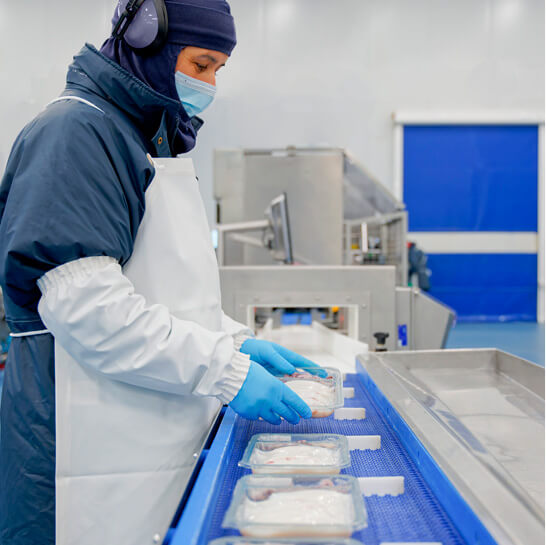
«It isn’t easy to find a tool that really works for middle managers in an industrial setting, and LEIA’s personalisation has made it possible. We have strengthened leadership where it has the most impact.»
 Alexandre PérezCorporate HR Director – Profand

-

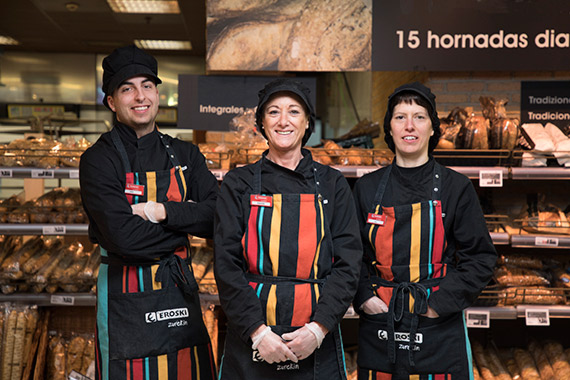
«In an environment where geographical dispersion makes communication harder, LeIA is helping us train key conversations with our teams»
José María CabanillasHR Director, Logistics Platforms – Eroski

-

«LeIA has been the perfect tool to make sure what is learnt in training carries over, because it lets leaders practise feedback in a safe environment before doing it with real people on their team.»
Antonio OrtizPeople Department – Platos Tradicionales








Your first conversation
Which conversation shall we start with?
Pick one and we’ll prepare it for the demo with your case.
We’ll prepare “Giving performance feedback” with your case.
What happens in the demo
- 30 minutesby video call, with whoever runs your manager training.
- Your conversation in LeIAwith Ana and the report at the end, just as your team will have it.
- A reply within one working daywith no commitment.
What people ask before they start
Talk to salesWho can see what my managers say?
There are no options to choose from. Your manager speaks and LeIA responds to what it has just heard. If they repeat the same argument three times, the conversation gets stuck, just as it would on a Tuesday at the office.

Can we create scenarios with our own situations?
Yes. Besides the catalogue, we adapt scenarios to the challenges of each team and company, with your context and your tone.
How long does it take to get started?
Activating an account takes us a month at most. During that time we put the training programme together with you, select the catalogue scenarios and create the custom ones you need.

Which languages does it work in?
Spanish, English and German. Need another language? We prepare it on demand; tell us which one.

The rest of the platform
Understand, support, learn.
Mentiness Analytics
Understand
Science-based surveys and continuous pulses, alongside your Human Resources data, to know what each team needs before someone leaves.
- Starting point
- A team you want to understand
- The question
- What does each team need?
Mentiness Assistance
Support
Psychologists and coaches support your people in online sessions, in their language and with no waiting lists.
- Starting point
- A person who needs support
- The question
- Who supports them?
Mentiness Learning
Learn
Training made for your company: short lessons built from your teams’ real challenges.
- Starting point
- A team challenge
- The question
- What do they need to learn?
Start with one
Which conversation does your team need to practise?
Choose a real situation and we will show you how it is prepared with LeIA.

