
Understanding psychological safety at work
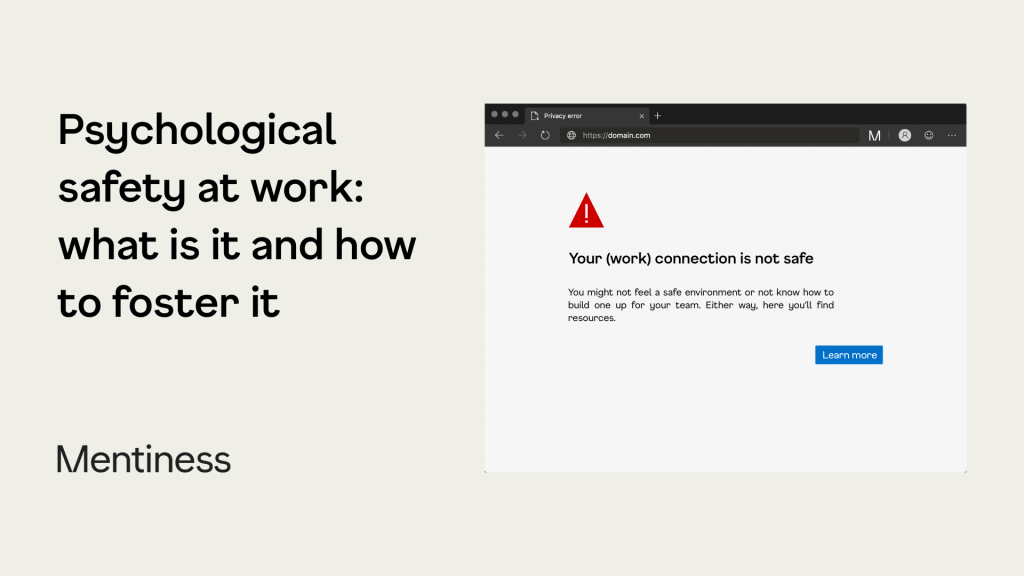
Psychological safety is not a trendy buzzword: it is the fertile ground where innovation, collaboration, and resilience thrive in modern teams.
Can your team say “I don’t know,” “I need help,” or “I have a crazy idea” without fearing judgment?
If not, you have a more serious problem than any performance KPI.
In this article, you’ll discover what psychological safety at work truly means, how it impacts innovation, performance, and retention, and how you can foster it within your organization.
It’s not about making everything “happy” all the time. It’s about creating environments where people dare to be human.
Psychological safety at work: a clear definition
Psychological safety is the shared belief within a team that it is safe to take interpersonal risks.
In other words, people feel they can:
- Ask questions
- Admit mistakes
- Request help
- Propose different ideas
Amy Edmondson, who coined the term, showed that teams with high psychological safety actually make more mistakes… but they catch and correct them faster, learn more quickly, and ultimately perform better.
Important: psychological safety does not mean the absence of conflict or low standards. It means that conflict can exist without fear of humiliation or retaliation.
Why does it matter so much in today’s workplace?
In a world of constant change, the ability to adapt, innovate, and learn fast is the new competitive edge.
And psychological safety is its hidden engine.
Proven impacts:
- Innovation: without fear of ridicule, disruptive ideas surface.
- Productivity: less time hiding mistakes, more time fixing them.
- Retention: people don’t flee from high expectations; they flee from fear.
- Talent attraction: new generations value trust-based environments over hefty paychecks.
According to Google’s Project Aristotle, psychological safety was the number one factor that differentiated their high-performing teams from average ones.
Still think it’s just a “soft” or “secondary” concept?
Factors that build or break psychological safety
Factors that foster it:
- Leaders who truly listen, not just hear.
- Treating mistakes as a natural part of the improvement process.
- Safe channels to express disagreements or divergent ideas.
Factors that undermine it:
- Authoritarian or blame-driven leadership.
- Punishing honest mistakes.
- “Facade cultures” where political correctness outweighs honesty.
Psychological safety is built through every micro-interaction, not just through big speeches.
How to measure psychological safety in your company
The good news: you can measure the invisible.
At Mentiness, we apply People Analytics and psychometric assessments to evaluate:
- Confidence levels in expressing opinions.
- Perception of leadership support.
- Feelings of inclusion and respect.
These insights can be integrated into organizational climate surveys and are directly linked to key metrics such as innovation, turnover, and performance.
Curious to see how it works? Check out our solutions for measuring and enhancing emotional wellbeing in teams.
How to foster psychological safety in your team
There are many things you can do in order to foster psychological security in your team. Some of the best practices are:
- Model vulnerability: openly share your own mistakes and lessons learned.
- Ask before you speak: “What do you think?” before imposing your views.
- Welcome constructive feedback: even if you don’t apply every suggestion.
- Normalize iterative learning: fail fast, learn faster.
- Make feedback a habit, not a yearly event.
You don’t need a big budget to foster psychological safety. You need intention and consistency.
Psychological safety at work is not negociable
Psychological safety is not about “being soft”; it’s about being smart.
Creating spaces where people can express themselves authentically, challenge ideas, propose innovations, and learn together is the foundation for building high-performing teams, innovative organizations, and resilient cultures.
And yes: it’s also one of the best safeguards against turnover, burnout, and stagnation.
🚀 Want to measure psychological safety in your organization and design effective action plans?
Discover how to do it with Mentiness and start building the culture your talent needs to shine.

Rebeca Calvo Barros