Parece que tu navegador está configurado en español. Haz clic aquí para la versión en español

Collective intelligence: How emotional intelligence drives team success

Collective Intelligence (CI) is not simply the sum of a team’s individual intelligences, but a group’s ability to collaborate and solve complex problems together. In an increasingly interconnected work environment, understanding how to boost this group intelligence is the key to maximizing innovation and business performance. In this article, we analyze the factors that influence collective IQ and how you can foster it in your organization.


Let’s talk about inspiring quotes: “The whole is not equal to the sum of its parts.” Or, “A group as an entity cannot be smarter than its components, but it can certainly be less.” Since the dawn of time, the collective has surpassed the individual. Two is more than one. As this phenomenon carries into the present day, where teamwork is mandatory, we must optimize ourselves.

Teamwork is not a simple addition; the pieces don’t always fit. In this system, collective intelligence plays a vital role.

The team as a unit: why the whole is not equal to the sum of its parts

Let’s step away from the concept of the individual for a moment and look at the team as a unit. A work unit. Like any unit, it is composed of several parts.

If we consider the most basic way a team works, it would be the meeting. If we are colleagues working together, we need meetings. In these meetings, questions and answers are raised, synergies are generated, and knowledge insights are created. It all comes down to the phrase “two heads are better than one.”

But we all know that meeting isn’t enough. We’ve all had sterile meetings—sessions where time was lost and nothing tangible was achieved. In other cases, however, it’s been a matter of minutes to find useful solutions and ideas.

What determines a team’s Collective Intelligence?

When we join teams, meet, or collaborate, something called Collective Intelligence appears. This is the intelligence “per se” that the group possesses. And here comes the key ingredient… contrary to what we might think, it isn’t determined by academic skills or individual IQ.

So, what on earth actually defines collective intelligence?

Collective intelligence: How emotional intelligence drives team success

The key ingredient is Emotional Intelligence. Therefore, a group of individuals with high emotional intelligence will create high collective intelligence.

Naturally, the higher the collective intelligence, the more productive and successful the group will be.

“Collective intelligence is like the sum of the most human talent of its individuals.”

Daniel Goleman’s experiment on group emotional intelligence

In his book “Leadership: The Power of Emotional Intelligence,” Daniel Goleman highlights a fascinating study. The study analyzed what led certain individuals to be the “stars” of their group. Given that the group consisted of people with the highest IQ scores, another factor had to be at play.

The task required teamwork: designing and creating electronic switches for telephone systems. No one could do it alone; they had to rely on the team. When asked to select the “stars,” the group agreed. Neither IQ nor academic performance predicted success.

The one factor they all shared was the ability to “network.”

Informal Networks: The secret of high-performance teams

People live immersed in different types of networks.

  • Formal networks: These are typical corporate structures. They are slower and designed to solve simple problems, usually depending on technical profiles and specialists.
  • Informal networks: These are the ones we “weave” with our circle of acquaintances—friends, family, and colleagues.

The most successful people in this experiment had excellent informal networks. They had support systems to turn to for help. This allowed them to solve problems faster and more effectively, without waiting for an expert to “save” them.
Collective intelligence: How emotional intelligence drives team success

Types of informal networks: communication, expertise, and trust

There are three types of informal networks:

  1. Communication networks: Who we talk to regularly.
  2. Expertise networks: Who we go to for their technical knowledge.
  3. Trust networks: Our confidants and safe support systems.

The “star” profiles in the experiment maintained good relationships across all three networks. They were empathetic, capable of coordinating people, and possessed:

  • Interpersonal and intrapersonal skills.
  • Initiative (motivation).
  • Self-management.

These qualities define Emotional Intelligence. Thus, emotional intelligence is responsible for collective intelligence. A group of emotionally intelligent individuals will inevitably form a group with great collective intelligence.

Ultimately, good collective intelligence impacts Intellectual Capital: the collective knowledge and tangible information of an organization that allows it to produce value.

Talking about only one type of intelligence is a thing of the past. The companies that will lead the future are those that realize their greatest asset is the intellectual capital generated by emotionally healthy teams.telligence is a thing of the past. And the smartest companies are starting to realize this.

Boost your organization’s Collective Intelligence

At Mentiness, we help companies weave these networks of trust and develop the emotional intelligence of their teams.


The Christmas Blues

Twinkling lights, holiday vacations, turron, marzipan, company dinners, family meals, snow, more twinkling lights…

Christmas is that time of year so many love… and that many others claim to detest.

But… why can a season like Christmas sometimes generate unpleasant sensations or emotions?

Sad Carols

We’re talking about the Christmas blues, also known as white depression. The Christmas blues is characterized by a series of mood disturbances. These disturbances range from apathy or loss of interest in the festivities, to sadness.

But.. where does the Christmas blues come from? Why, in a time (in theory) perfect for being happy eating chocolate with family and giving each other gifts… do we get sad?

The “Mr. Wonderful” Smile

One of the reasons this phenomenon occurs is that we cannot fully choose when to feel sad and when not to. Therefore, regardless of the time of year, we can go through a less “cheerful” stage or experience more emotional difficulties.

If this happens, Christmas with its lights and smiles is seen as an imposition. A kind of “you have to be okay, pretend to be happy.” “It’s a happy time, don’t ruin it.”

Therefore, emotions that are not “in tune” with this time are minimized and invalidated. Moreover, since Christmas in our hemisphere is celebrated in winter, other factors influence it. These factors include the lack of light, the change of time, the cold, and the consumerist character of the holidays. Therefore, they can exacerbate any existing economic, emotional, or other kinds of difficulty.

Furthermore, going through a difficult time, whatever the area, generates a comparison effect. Automatically, seeing other people happy or not going through that difficulty only makes us feel worse.

And we cannot schedule emotions whether it snows, rains, or shines… and sometimes, Christmas doesn’t mean life is rosy

Symptoms of White Depression

Some of the symptoms of this “blues” include:

  • Apathy or loss of interest in activities that used to be pleasurable
  • Sleep and eating problems
  • Worsening of depressive or anxious symptoms
  • The need to return to an orderly routine
  • Avoiding social commitments and isolation

Clearly, each person is unique, and many factors can cause the “Christmas blues”. Anyway, it’s not categorized as a disorder. Still, it’s important to be aware that not everyone experiences these dates in the same way.

Therefore, instead of judging those who do not see Christmas with the same excitement as we do, we could ask ourselves a series of questions.

Is this person going through a difficult time?

Does making a gift pose an economic strain?

How has this person experienced Christmas in their family throughout their life? Is there a whole ritual around it?

Are they noticing the lack of light or excessive cold?

Have they gone through a grieving process or are missing someone?

These (among others) are questions we can ask ourselves. Because remember, we can’t schedule our happiness to celebrate the New Year with us. And sometimes, things are complicated even surrounded by turron and colored lights

Introducing the Mentiness Course on Stress

At Mentiness, we’re celebrating.

With Christmas and the New Year just around the corner, we’ve started a new section on our platform with great enthusiasm: learning paths.

In this first phase, we will have several learning paths that include an introductory course and several specific courses each. Each path aims to train you on topics related to psychology. All these topics will help you improve your well-being and that of your teams.

First Stop, First Path

This first learning path we’re launching is on the theme of stress. In it, you’ll learn everything you need about stress and how to manage it. It will also include specific courses on:

  • Bad stress and good stress
  • Stress and productivity
  • Relaxation techniques (with some practical surprises for you)
  • Mindfulness (which also brings a final gift to offer you a complete experience)

Our Purpose

And each of these specific courses will be loaded with interesting information. Their content ranges from scientifically backed relaxation techniques to curiosities about our brain or insights into the neurobiology of stress.

Have you ever heard the phrase “knowledge is power” or “knowledge takes no space”?

Surely you have, right?

In our team, we have those two phrases almost as a mantra that we try to apply constantly. Not only to recycle ourselves and train as professionals day by day but also to offer services and products that have a positive impact on the well-being of employees.

That’s why we have designed three different learning paths, with stress being the first. Because we know that often, risk behaviors, bad habits, or incorrect problem coping are not done just because. They are usually due to a lack of information and unawareness of more useful strategies and tools.

That’s why we provide you with materials from our Health Psychologist. So you can listen, take notes, and gather everything that seems useful to you and can be of help.

Stay tuned, we’ll be revealing more secrets in the coming weeks!

Are you interested in our course section and learning paths?

If you want more information about our work and how it can help your company, leave us your details and we will contact you!

Pablo Picasso’s Brain

26075

No, it’s not the Christmas lottery number (as far as I know).

It’s the number of works Picasso created over his 91 years of life.

Some even say that this number is false and it’s around 50000.

Either way, it’s a number that almost scares if we think about the amount of work he had to create in a week. Consistently. All the time.

Do you think Picasso had a magnet for creativity? Or is there something he perhaps knew and we… are overlooking?

Creativity on the left or creativity on the right?

Historically, we have thought that the right part of the brain is dedicated to being creative and that the right side is more logical. We’ve made that division and depicted it in all sorts of drawings and sheets with numbers on the left and butterflies and colors on the right.

Well… as of today we know that this theory is flawed. First, because localizationism (today’s fancy word referring to attributing a specific function to each region of the brain) no longer serves as an explanation. Second, because we know more and more about the differences between anterior, posterior, medial regions… That is, not everything significant is left or right, but there’s anterior left, posterior left, medial left… In short, a mess of locations.

Therefore, simplifying creativity to left-right no longer makes logical sense. It depends on processes above, below, in the center, on the right…in many places. It depends on circuits that are not as localized as we might have thought

Equal but different

The left hemisphere has fewer connections with itself and the rest of the brain.

The right side, has more connections with itself and the rest of the brain. Moreover, it has strong links with regions that our emotions “depend on”. Regions, such as the amygdala.

The right hemisphere is “mixed”. The left, presents stacked columns that allow a clear differentiation of brain functions.

And of course, being everything so complex and creativity such a broad process… well, it doesn’t depend only on the right side.

It is true that given the difference in connections, in a “flash” of creativity a new neural circuit emerges from this right part.

What Picasso knew

Is that creativity doesn’t appear when you’re sitting waiting for it.

If we get theoretical, the most known models about creativity talk about 4 phases:

  • Defining the problem frame. Asking questions to know what to be creative about
  • Diving deep into it. Gathering information until we are soaked with it
  • Go with the flow. Letting go, relaxing so that “chasss” that burst of creativity appears
  • Execution, carrying out the idea we have conceived

Theoretically, the model is “cool”. Of course, if you have to create 25000 works of art in your life, it might fall a bit short, right?

This is where Pablo Picasso’s example comes in. One of his phrases is that “inspiration and creativity” find you working. Therefore, you can’t just sit and wait, wait, wait…

The best thing is that you get to work (never better said) and know when to stop, where to disconnect, and in what place it will be easier for that “divine” inspiration to come.

Eureka

Brain studies tell us what happens in our brain at that moment of spark, idea.

There’s a signal, the “gamma” activity that tells us what we’ve been longing to hear. Neurons, initially very distant, have connected forming a nervous network and… Voilá, there’s a new association, there’s creativity. A new idea has entered our “consciousness”.

At this moment, the right hemisphere doesn’t waste time and uses its super connections to send that information to other regions. And it’s in that third phase, that more “chill” phase in which our brain prepares for the gamma peak of creativity. Even when ideas seem to be born on their own, it’s most likely they’ve gone through a previous “gestation” process.

And when the ground has been leveled, they are born.

Of course, as always, it’s very important to know oneself and understand how this process occurs. It’s not exactly a textbook process and it can vary from person to person, but what’s clear is that if Picasso painted so many paintings, he couldn’t have done it simply waiting for ideas to sprout.

“Discipline”, self-awareness, and a prior order to relaxation are needed for the light bulb to turn on

Digital well-being and “Like” addiction: The impact of Dopamine

Digital well-being in the workplace has been compromised by a growing addiction to likes and a constant search for external validation. In a world where dopamine dictates the pace of our interactions, understanding how these dynamics affect team mental health is key to maintaining productivity. In this article, we analyze the science behind immediate recognition and show you how to foster a healthy balance within your organization.

If you are concerned about how digital dynamics are impacting your company’s performance, our analytics platform can help you identify and prevent emotional exhaustion through real-time data.

As we always do, let’s begin with a few questions for reflection:

  • How do you feel when you receive a compliment in an Instagram comment?
  • How do you feel after having that cup of coffee you were craving?
  • What do you feel when you are congratulated for a job well done?

Let’s dive in. Welcome to the fascinating world of dopamine, rewards, and digital well-being.

Digital Well-being and Dopamine: Do We Need the Likes?

When we receive an unexpected reward, our body experiences an immediate sense of well-being. This phenomenon occurs because, in response to any positive stimulus—whether it’s a financial incentive, professional recognition, or a simple “like” on social media—our brain activates a positive reinforcement system.

As the name suggests, this mechanism drives us to repeat the original behavior to obtain the reward again. In the realm of digital well-being, likes function as an instant achievement, sending implicit validation messages such as:

  • “You share great content.”
  • “I like your style or the way you work.”
  • “We approve of what you just posted.”

In all these cases, the action performed is reinforced—whether it’s sharing a personal moment, a professional milestone, or a carefully curated image. A “like” is immediate recognition. This is why we check our feeds minutes after posting: we seek approval and recognition here and now. This immediacy is precisely what creates the habit.

In a corporate environment, we must pay special attention to reward dependency, especially if we aim to build psychologically healthy workplaces.

Digital well-being and "Like" addiction: The impact of Dopamine

The Impact of External Validation on Digital Well-being

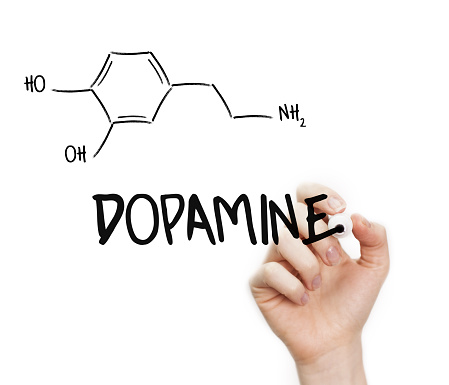
Receiving likes is equivalent to “flooding” our system with dopamine. But what exactly is dopamine?

Dopamine is a neurotransmitter present in various areas of the brain, essential for motor function and, most importantly, for nervous responses related to the expression of emotions. It is a natural and necessary substance that our brain secretes in certain situations.

Being so closely linked to emotions, dopamine is the hormone generated by immediate pleasure (such as eating something we enjoy or making a purchase). Likes act as that instantaneous reinforcement: interaction = dopamine.

The Effects of the Dopamine Cycle

When we receive that dose of dopamine, we feel pleasure. Our brain likes this sensation and tends to seek it out repeatedly. Similar to the habit generated by caffeine, digital validation creates a pattern: as the behavior and reinforcement are repeated, the body demands more of the substance that generates well-being.

This is why social media can become addictive. It triggers dopamine release and can lead us into a loop where we need larger and more frequent doses to feel good, similar to other immediate gratification impulses.

Digital Well-being Strategies to Improve Workplace Self-esteem

Beyond the biological explanation, other psychological processes influence our dependency on digital image. The key lies in where we place our self-esteem.

If we base our personal value exclusively on external factors or compare ourselves to the seemingly perfect lives we see on social media, we feed the cycle of dependency. When biology (dopamine) meets self-esteem that relies on external recognition, we face a real risk to mental health.

The “Pie Technique”: A Self-assessment Exercise

To prevent digital well-being from being compromised, it is useful to analyze the weight we give to different factors that condition our self-esteem (physical appearance, professional success, relationships, etc.).

Are you familiar with the “Pie Technique”? It is a simple yet powerful tool for visualizing our self-concept. In upcoming articles, we will delve deeper into this exercise to work on that “cake” called personal self-esteem.

Our world will continue to be a field of dopamine. We cannot change our habits overnight, but transformation begins by becoming aware of where our validation comes from. At Mentiness, we have spent years working toward one goal: humanizing organizations.

Data-driven well-being: Measure what matters

Is digital validation-seeking affecting your team’s focus? At Mentiness, we help organizations identify these trends before they lead to burnout. Our analytics platform provides real-time insights into psychosocial risks and employee self-esteem. Discover our Analytics tool and start to measure!

The Best CEO of All

He doesn’t wear a suit and doesn’t look like he’s always busy.

He has quite a few wrinkles, and in fact, the more wrinkles he has, the better he works.

He always takes control of the situation, and we all depend on him when it comes to work.

He makes the decisions, evaluates options, and organizes most of the things that need to be done.

Do you know who I’m talking about yet?

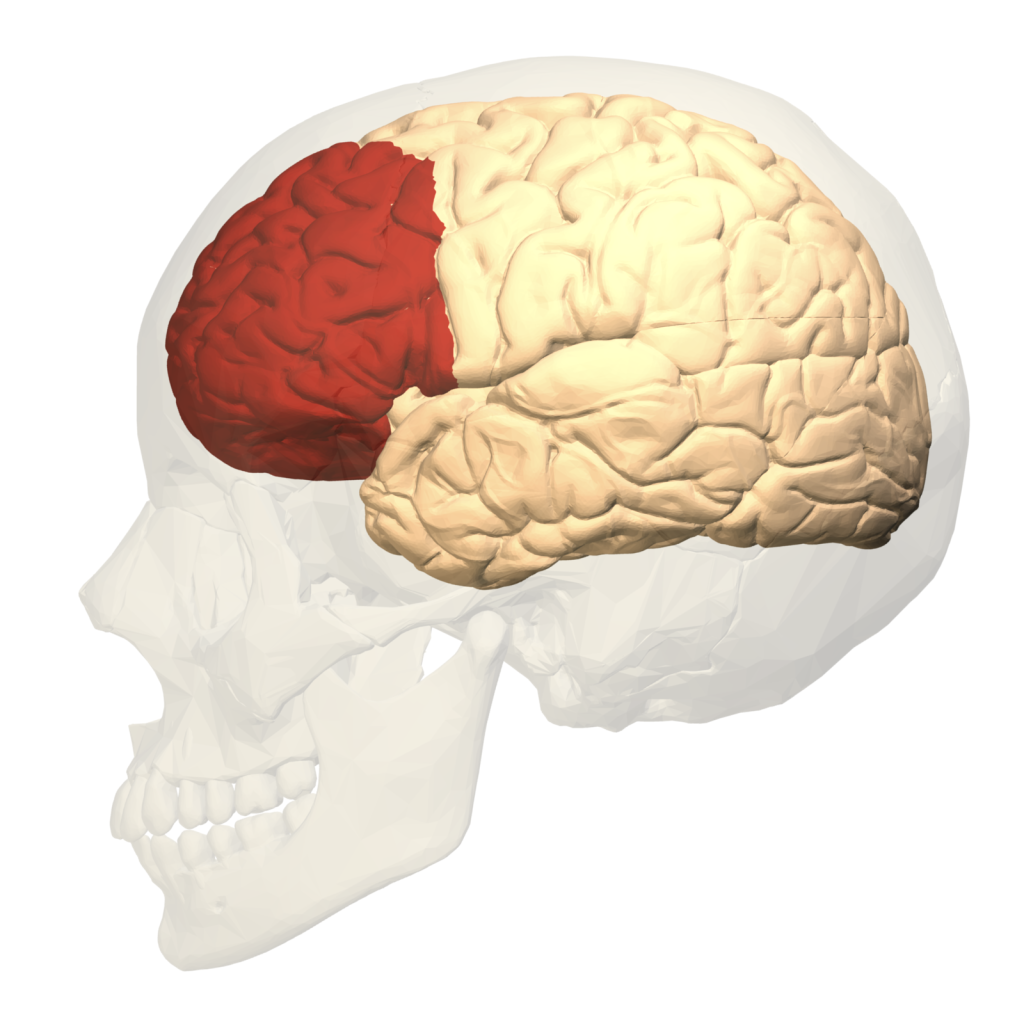
The Prefrontal Lobe

The prefrontal lobe, as its name suggests, is the part of the brain that is right behind our forehead. That is, at the front of the brain. This specific region, the prefrontal, is to blame (thankfully) for us having organizational skills, monitoring, inhibition of our behavior, planning, managing emotional reactions, evaluating scenarios and alternatives…

In short, a real gem.

The prefrontal lobe is responsible for something vital to human beings functioning well: executive functions.

Many functions, very executive

Executive functions, along with attention, memory, or language, are what we call higher cognitive abilities. In general, these skills are what allow us to behave, feel, and think the way we do.

In short, a good part of the reason humans are human is due to these higher cognitive abilities.

Well, within these abilities are the executive functions. These, in turn, are a set of very diverse functions that range from task planning to inhibition and behavioral control, through cognitive flexibility, achieving our goals, adapting to the environment, or decision-making.

Thanks to executive functions, we can do things like:

-Organize our tasks

-Monitor our behavior while frying an egg, avoiding getting burned

-Ignore the popup ad that opens in our browser when we enter some websites

-Switch to another restaurant if our favorite one is closed

-Plan those ideal summer vacations

-Anticipate that if we’re going to the beach, we’ll need flip-flops, sunscreen, several swimsuits for the whole vacation…

That’s why we say the prefrontal lobe is the CEO of our brain, as it plans, anticipates, coordinates, decides, and manages what we do with our lives.

When there’s an orchestra, but no conductor

Have you ever considered what happens if the prefrontal cortex fails? Or if there is an injury in that area.

Or if for various reasons, such as chronic stress, it is affected.

A person with an impairment in executive functions due to a problem in this part of the brain can exhibit numerous problems and difficulties. Some of them may include:

  • Not being able to plan the steps of a task, such as doing a job. Therefore, they will have many difficulties in organizing that project and starting it.
  • Perseveration errors, which translate as making the same mistake over and over. For example, imagine putting the accelerator and clutch pedals in the wrong place. If there is a perseveration error, it’s probably impossible to start the car as they would make the same mistake over and over again.
  • Behavioral disinhibition: this is perhaps one of the most striking since they can have erratic behaviors such as shouting in a supermarket, engaging in sexual behavior in public, or saying obscenities to strangers.
  • Problems with self-control which can be reflected as anger outbursts or exaggerated hostility reactions.

And a long (but very long) etcetera.

Do you now understand why this part of the brain is the best CEO of all?

If You Have Trouble Organizing, This Is Your Post

Have you ever heard of the Eisenhower Matrix?

One of the biggest problems we encounter when organizing ourselves is prioritizing the tasks we have to do.

Why? Because when we have pending tasks, we tend to see them as a threatening ball of work coming towards us and, oh my god! I don’t know where to start.

And suddenly, boom! Overwhelm and blockage.

A “wonderful” matrix

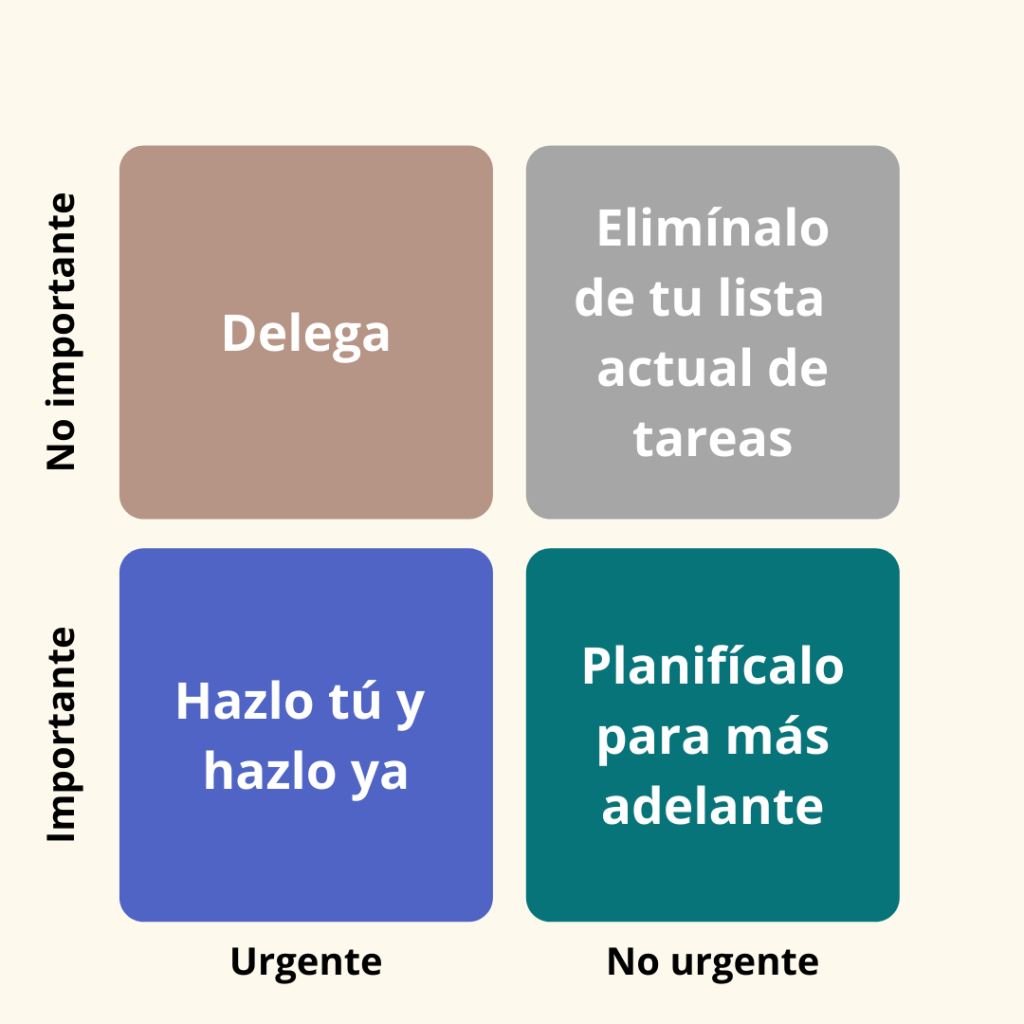
The Eisenhower Matrix is a kind of box matrix that divides your problems and tasks according to two different criteria: how important they are and how urgent they are.

Its characteristic name comes from a gentleman named Dwight Eisenhower, a high-ranking officer in the US military well known for his productivity levels. According to his matrix, you have to evaluate your tasks based on their urgency and importance to organize yourself in the best possible way.

Four scenarios, four combinations

There will be tasks that you absolutely have to do yourself and others that are important but not urgent, or urgent but not important, or…

Basically, draw two lines, one vertical and one horizontal. Write the words urgent, not urgent and important, not important. This will give you a 2×2 matrix, i.e., four squares. In this matrix, you will have the following situations:

It is important and it is urgent: aha! this will be the first task on your list, the priority one.

It is important but not urgent: great, you can plan it for later.

It is not important but it is urgent: delegate, if you have the possibility, to someone else.

It is not important nor is it urgent: wonderful, out of your list. Keep it aside for future task lists.

What are its benefits

  • Saves time when classifying your tasks and ordering them
  • Helps to not go through that initial overwhelm of feeling that you have a lot of work and not knowing where to start.
  • Improves your productivity since it allows you time for what’s really important: doing the task
  • Clears “mental spam”. When we have several things to do, we are putting our working memory to the test. This memory, also called operational, is dedicated to retaining necessary information to be able to work with it (for example, I have to do this, and this, and this…while I’m scheduling it). Basically, the matrix helps us not to overload this “mental spam”, making it easier to manage this information
  • Reduces mental load: one of the worst things about having several tasks is that it adds one more task, thinking about them. This is what is called mental load. That is, in addition to having to go to the supermarket to buy water and milk, we have to think that we need to go to the supermarket to buy water and milk. Ah, and don’t forget that you have to go to the supermarket to buy water… This mental load occupies space in our brain and, therefore, diminishes our cognitive capacity. As a result, it also diminishes our productivity.
  • Facilitates our organization in a group since it helps prioritize tasks according to our role.
  • Reduces work stress as it facilitates organization

As a result of all these benefits, two things happen: our productivity increases, and our motivation does too. Motivation is positively affected as it increases our perceived self-efficacy. That is, we see ourselves as more effective, we feel proud, and therefore, we feel more motivated.

Are you encouraged to try this recipe for productivity?